

Maintenance tips for your equipment - Fall
Fall is well underway and winter is on its way, so you need to plan the maintenance of your equipment to ensure your investment is well protected, whether you store it or use it throughout the cold season.
If you’re comfortable with hands-on work, you can perform several maintenance steps yourself. We have everything you need: stop by and see the parts team at your local store—they’ll be happy to advise you and provide you with the right parts for your equipment.
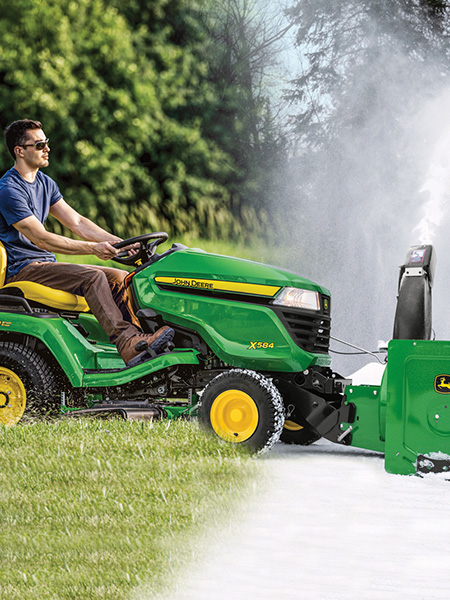
Key steps for winterizing stored equipment
GAS ENGINE (Lawn tractors):
Fuel: Fill the gas tank (to prevent condensation), add a fuel stabilizer, and run the engine for 5 minutes to ensure the stabilizer circulates throughout the carburetor.
Oil Change: Change the engine oil and replace the oil filter to remove acidic residues.
Cleaning: Remove grass clippings, dirt, and debris from under the cutting deck and around the engine to prevent rust and keep rodents out.
Battery: Disconnect the battery (negative terminal first), clean the terminals, and store it in a dry, frost-free location using a battery charger/maintainer.
Lubrication: Grease all moving parts and pivot points.
Dry Storage: Store your equipment in a clean, dry garage or shed, and cover it with a breathable protective cover.
DIESEL ENGINE (Compact tractors):
Diesel Fuel: Fill the fuel tank completely to prevent water condensation, and add a stabilizer and antifreeze treatment suitable for diesel fuel.
Oil change and filters: Change the engine oil and replace the oil filter to remove acidic residues. Replace the fuel filters according to the manufacturer’s recommendations.
Cleaning: Remove grass clippings, dirt, and debris from under the cutting deck and around the engine to prevent rust and keep rodents out.
Battery: Disconnect the battery (negative terminal first), clean the terminals, and store it in a dry, frost-free location using a battery charger/maintainer.
Lubrication: Grease all moving parts and pivot points.
Dry Storage: Store your equipment in a clean, dry garage or shed, and cover it with a breathable protective cover.
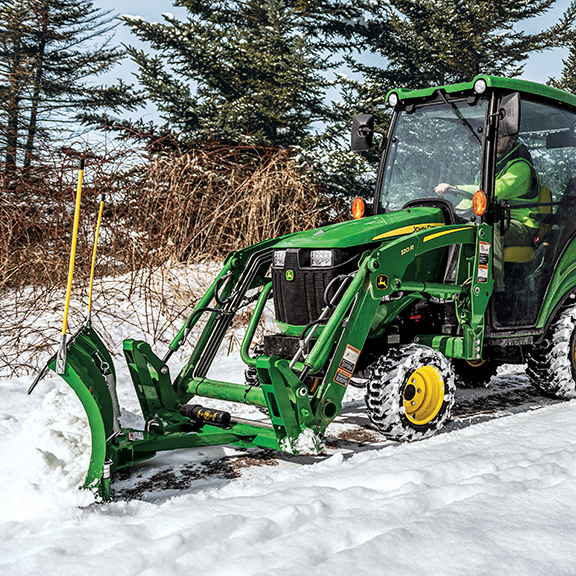
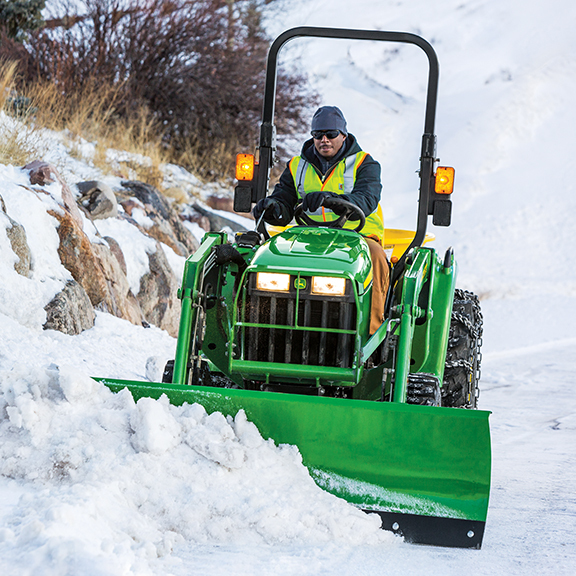
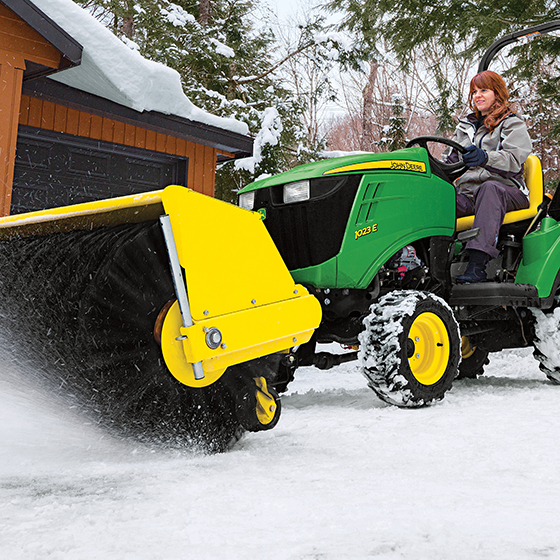
Don't use your equipment for snow removal?
Find out how to get the tools you need so you can make the most of your equipment all year round.
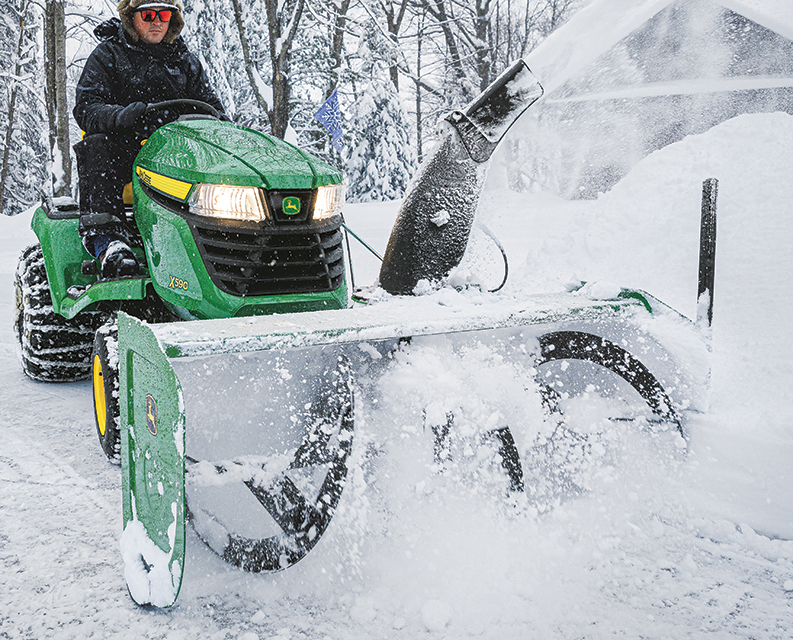
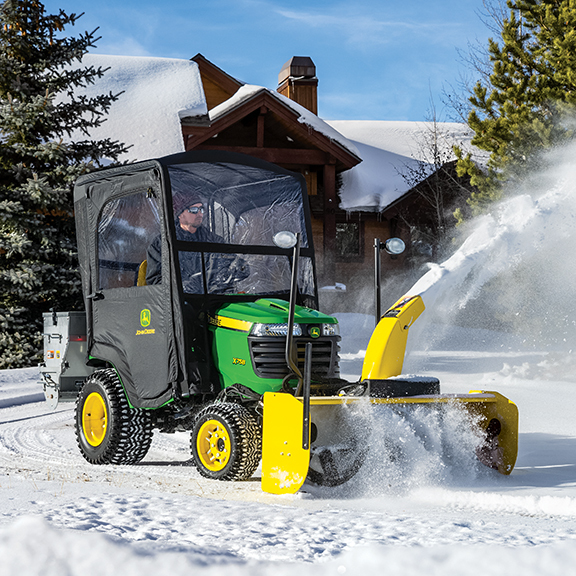
Key steps for winterizing equipment for winter use
GAS ENGINE (Lawn tractors):
Fuel: Keep the fuel tank full after use to prevent condensation.
Lubrication: Lubricate all grease points with a grease suitable for cold temperatures to displace moisture and prevent seals and shafts from freezing solid.
Tire Pressure: Dropping temperatures cause air pressure to decrease. Readjust it according to winter specifications.
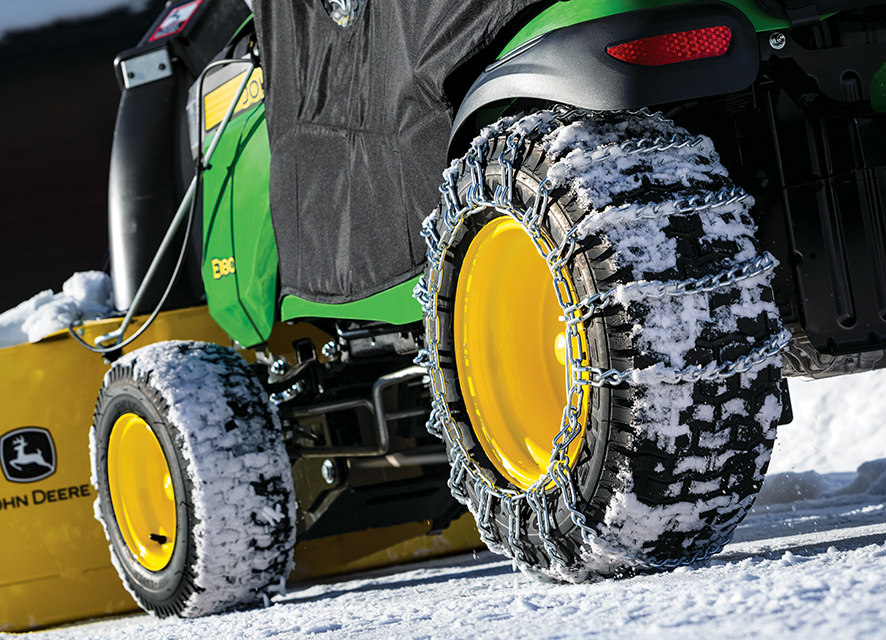
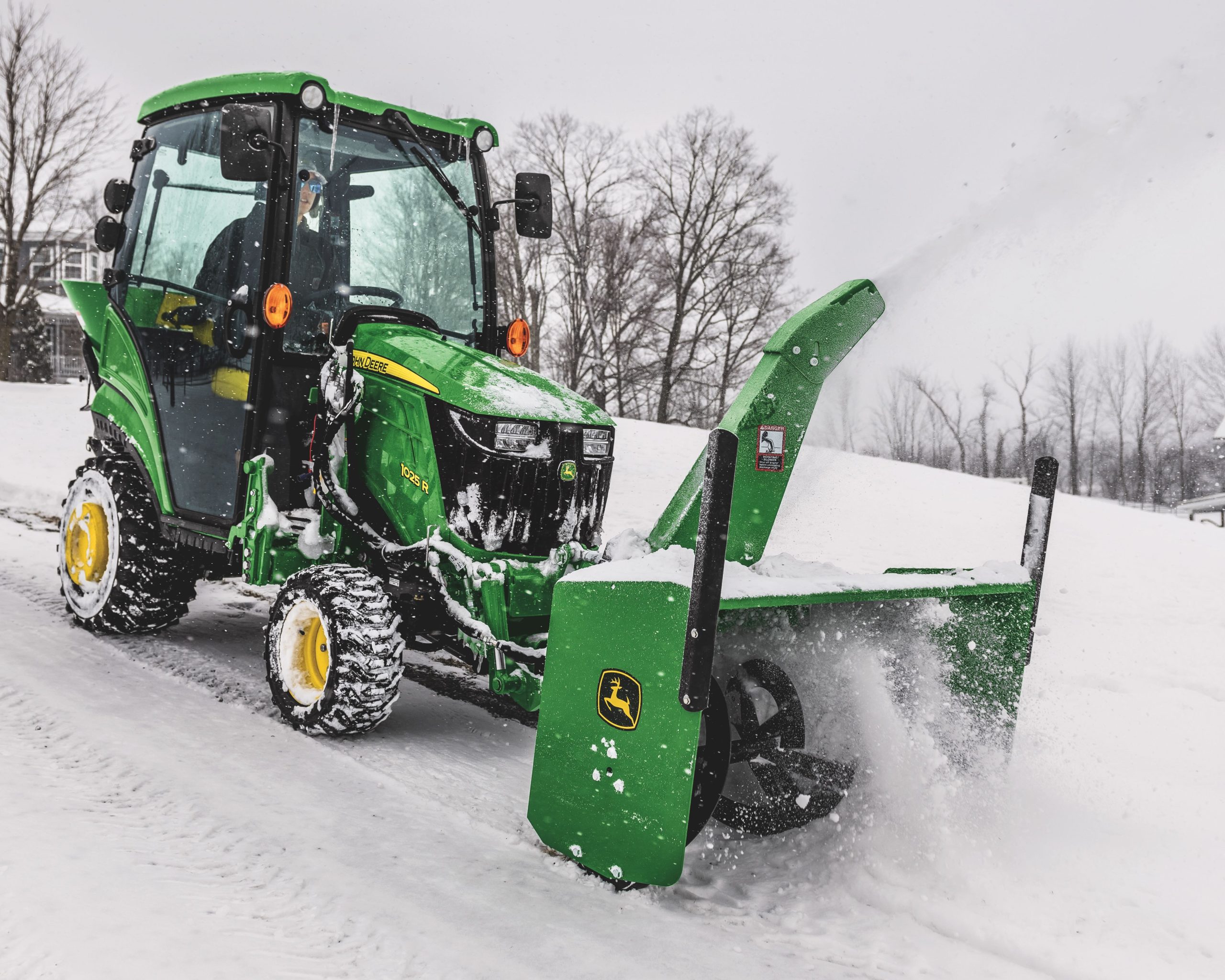
Ballast and chains: If you install a snowblower or front blade, add a counterweight to the rear (Bio-Ballast liquid ballast in the tires or a ballast box) to stabilize the machine. Snow chains on the rear tires will significantly improve traction on ice.
DIESEL ENGINE (Compact tractors):
Switch to winter diesel: As soon as temperatures drop below 0°C, use winter diesel fuel (No. 1-D in North America).
Fill the tank: Keep the tank as full as possible to remove air and minimize condensation.
Use an anti-freeze additive: Add John Deere diesel fuel conditioner (winter formula).
Drain water: Inspect and drain the primary water separator daily. Condensed water freezes quickly and can damage your fuel injectors or block the fuel line.
Lubrication: Lubricate all grease points with a grease suitable for cold temperatures to displace moisture and prevent seals and shafts from freezing solid.
Engine heater (Block heater): If you use the tractor in the winter at temperatures below -7 °C to -12 °C (10 to 20 °F), it is strongly recommended that you plug in an engine heater a few hours before starting the engine to facilitate starting and reduce mechanical wear.
Caution regarding glow plugs: Never spray ether or starting fluid if your compact tractor is equipped with glow plugs or an intake air heater, as this could cause a serious internal explosion.
Tire pressure: Dropping temperatures cause air pressure to decrease. Readjust the pressure according to winter specifications.
Ballast and chains: If you install a snowblower or front blade, add a counterweight to the rear (Bio-Ballast liquid ballast in the tires or a ballast box) to stabilize the machine. Anti-skid chains on the rear tires will significantly improve traction on ice.
Do you know the Equipment Mobile App?
For tips on maintaining your equipment, the Mobile Equipment app will be a great resource. Take advantage of lots of additional features, such as:
- Quick and easy access to owner information
- One-stop access to all your equipment information
- Access to a how-to video library
- Simplified parts purchasing and ordering
- Planning and follow-up on your maintenance requirements
- Access to current promotions